Welcome to the 2025 edition of the O11ys - the awards for the Observability industry. This is our third year of running the awards and this year we have changed things up again - with some new categories being added and some of last year's categories being rested.
As we have mentioned in previous years, the O11ys are not about one system being better than another and, as such, we don't have a category such as "Best Observability System". Instead, we endeavour to highlight particular features, innovations, contributions and achievements. Observability is an incredibly active and diverse space, with a truly spectacular rate of change. The O11ys therefore are our own idiosyncratic take, a snapshot of a particular moment.
Without further ado, let's unveil the winners!
 New Product/Service

The past couple of years have seen intense coverage of the issue of observability volumes and costs. Much of this has centred on vendor-led solutions and discussions around sampling and filtering. Juraci Paixão Kröhling and the team at OllyGarden have taken a first-principles approach to this problem. Instead of looking at ingestion they look at the importance of producing quality telemetry. When we first viewed tools such as the Telemetry Score we said that we thought it was one of the most exciting developments we had seen in the observability space, and that impression still stands. This is a vital project filling a long-standing void in the observability landscape.
Strategic innovation

"Composable observability" is a concept which sounds truly compelling in theory. Rather than going all in on a single vendor you can split your tooling across multiple products, each with its own best in class capabilities. In practice, this can be harder to achieve. Whilst OpenTelemetry has established standards for telemetry collection, creating a pluggable multi-vendor stack is quite a remarkable feat of orchestration. We think that Chronosphere's announcement of a partnership with vendors such as Checkly, Embrace, Polar Signals, and Rootly to create a cross-functional ecosystem is a truly exciting step in realising the composable observability vision.
Technical Innovations

The latter part of the year seemed to herald something of a revival for metrics. We seemed to be on a trajectory where tracing was on course to become the pre-eminent signal, with logging and metrics being reduced to the status of mere attributes of spans. Towards the end of the year, Sentry bucked this trend in spectacular fashion with the rollout of their new metrics module. This was a culmination of a long journey that involved ripping up a whole codebase and starting all over. The fruits of this labour though are a total re-think on how metrics should be done for APM.

Over the past year, every major vendor has incorporated AI to bulk up the debugging capabilities of their systems. Honeycomb, Logz.io and Observe have all produced great UIs. What gives Dash0 SIFT the edge for us is that it is not just AI-enhanced querying, it is more like a funnel leading the user through a structured and multi-layered process.
Cost Management implementation/Tooling

Grafana's Adaptive Telemetry was the first tooling of its kind. A set of processes that autonomously scan telemetry flows and identify logs, metrics and traces which can be aggregated or dropped safely. The beauty of this is that it brings a dynamic and evidence-based perspective to telemetry filtering. It eliminates guesswork yet also is intelligent enough to scale ingestion back up when usage patterns change.

With KubeCost having been acquired by IBM, OpenCost has been left to fly the flag for open source FinOps. Although many of the team behind the project are from a Kubernetes background, it is not restricted to managing K8S costs. It now has support for five major cloud providers, has produced its own vendor-neutral cost specification and has integrations for Datadog, MongoDbAtlas and OpenAI.
Open Source Project

The Perses project launched in 2021 and set itself the goals of both defining an open specification for dashboards as well as building an extensible, open source dashboarding platform This might sound like a niche concern, but it is strategically valuable and technically challenging. Over the past year the project has gained serious momentum and a number of landmark releases over the course of 2025 saw the rollout of a host of major features such as logging, continuous profiling, a new plugin system, OAuth2 support and more besides.
Pipeline Product

The pipeline sector has seen significant growth over the past few years, with a number of players entering the space and more and more companies recognising the strategic value of telemetry pipelines. Choosing a winner in this category was tough. Bindplane is both enormously scalable and provides fantastic automation for oTel collector fleet management. Likewise, Control Theory had developed a highly sophisticated suite of tools. In the end, Grepr won out for its innovative store and forward technology, which gives the best of both worlds. Low-value signals are kept in cheap S3 storage but can be dynamically pushed to your observability backend to assist with troubleshooting.
RUM Implementation

Embrace are pioneers in mobile observability and this year they brought their obsession with the user experience to bear on browser observability. The result is a highly sophisticated and granular platform that not only provides exceptional visibility into user experience but can also integrate with third party backends. Honeycomb, Dash0, New relic and others have all rolled out great RUM products but, for us, features such as User Journey Mapping just gave Embrace the edge.
LLM Observability Implementation

New Relic were first out of the LLM Monitoring traps with the release of their AIM feature back in November 2023. Since then, they have been followed by a stampede of vendors including SigNoz, Elastic, Observe, Middleware and many more. All of these systems support LLM tracing and report on key performance metrics such as token counts, response times and error counts.
The outstanding candidates in this category go above and beyond this and encompass the qualitative and governance aspects. There was not much to choose between Dynatrace and Datadog in this respect but in the end Datadog once again clinched the award, just shading it thanks to their functionality around evaluations and experiments.
Over the past year we have seen established standalone tools such as Langtrace go from strength to strength as well as seeing a plethora of new tools entering the market. Whereas most solutions look at costs from the point of view of token usage, tools such as Zymtrace and Neurox provide deep analytics on GPU and CPU usage. Galileo, meanwhile stands out for building a platform focusing on one of the hard problems in LLM observability - response evaluation.
Writer of the year
Last year the award went to Bijit Ghosh, who has continued to produce output of the highest quality. This year, the award goes to Paul Luzstin. As well as his blog output Paul has also open-sourced a large volume of learning materials on developing enterprise level AI solutions. His GitHub repo really is an invaluable resource. Although both Bijit and Paul focus mainly on AI, it seems that it is a domain that is, increasingly, indispensible for, and inseperable from, observability practice.
Observability Blog

Many vendors in the market produce high quality blogs, with content that goes beyond product marketing. Few, however, have been as prolific and consistent in producing technical, vendor neutral content as the Last9 blog. As well as extensive coverage of OpenTelemetry, the blog has also covered high level observability concepts as well as specific technologies such as Docker, Kubernetes, Nginx and many others.
Video/Talk
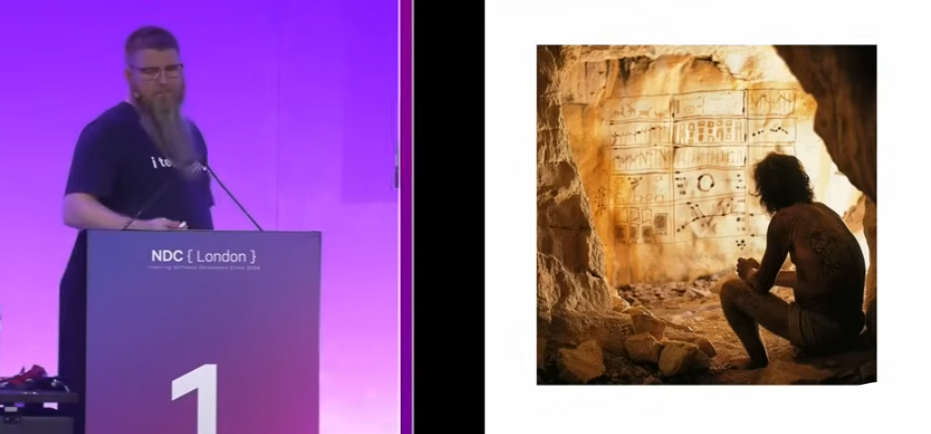
This was a category that we threw open to voting by readers of the Observability 360 newsletter. Votes were spread evenly across quite a number of talks - perhaps reflecting conferences that readers had attended. Some of our personal favourites were Michele Mancioppi's talk on No-touch Instrumentation and Prashant Gupta & Raj Bhensadadia's talk on simplifying dashboard management with MCP. The winner though, was this masterclass on Modern Observability and Event Driven Architectures delivered by Martin Thwaites & Ian Cooper at NDC London.
Story of the Year

2025 was another incredibly dynamic and eventful year in the observability space and there are a hatful of stories we could have chosen for this award.
The year kicked off with Datadog's highly astute acquisition of Quickwit - a log aggregation platform with stunning performance and scalability. In March, we adjusted our reality sets for the news of eBPF being ported to Windows - a story that might have seemed like sci-fi not long ago. Towards the end of the year came the sad news of Lightstep being shuttered whilst in November Palo Alto came out of left field to snap up Chronosphere.
In the end, the award went to ClickHouse's acquisition of HyperDX as it will likely have the biggest long-term impact on the market. ClickHouse were not just an observability backend in need of a front end. They also have a fearsome track record for execution and ClickStack will inevitably be a serious player.
Tsuga is a new full stack observability platform with some serious heft. CEO Gabriel-James Safar and CTO Sébastien Deprez have previously held senior Product Management and Engineering roles at Datadog. They also co-founded the Madumbo monitoring tool, which was subsequently exited to Datadog. With a strong engineering background, a performance-optimised BYOC (Bring Your Own Cloud) architecture and a high-power GTM team, they have the makings of being a potent challenger in the space.
After all the hype, a number of vendors are starting to walk the walk for AI SRE. Building models that can assimilate the complexity of distributed systems running on platforms such as Kubernetes is a tall order. However, a number of front-runners, such as Ciroos, Cleric and Resolve are starting to emerge, with agentic systems capable of identifying errors, triaging, recommending solutions and even carrying out recommendations. At the moment, Resolve seems to be leading the pack in terms of maturity and execution - but it is a highly competitive and fast moving field.
Fleet management is an essential concern for any company managing OpenTelemetry at scale and BindPlane are one of the leaders in this specialism. They dropped a number of major features during 2025 including BYOC (Bring Your Own Collector) and AI-Powered log parsing. They have also got 2026 off to a flying start with the announcement of a new ClickStack integration.
That concludes the O11ys for 2025. Don't forget to also check out our review of 2025 where four of the leading figures in the observability space share their reflections on the year.
Happy New Year!
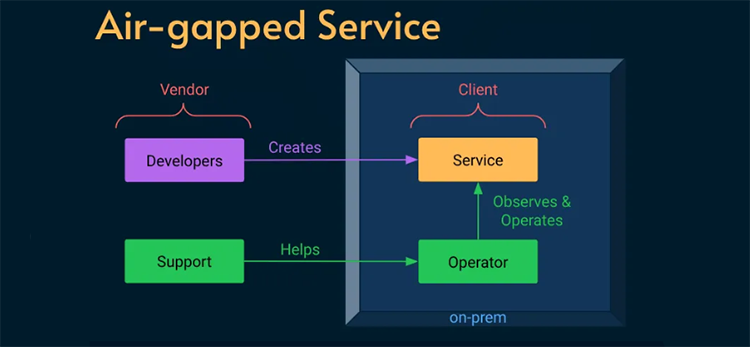
The excellent Alex Ewerlöf blog is now back in full swing and in this latest article he turns his attention to dealing with a real SRE curveball - how to build reliability engineering for an air-gapped system. We are talking hermetically sealed - not even a maintenance window for external connectivity. This task involved a high-security military facility where installing updates meant physically handing over an archive file to a system operator.
The constraints were pretty stringent - no logs, no metrics, no traces, no remote access of any kind.This was an extreme case and, ultimately, the solutions had to be both human-centred as well as relatively low-tech. How would you address the challenge? Hit the link below to read about the solution that Alex put in place.

In the past month or so the GitHub platform suffered a number of well-documented outages which resulted in loss of service for users. In the spirit of transparency, GitHub CTO Vlad Fedorov published this article on the GitHub blog, explaining the causes of the outages and the lessons learned as well as detailing the remediations that GitHub engineers will be putting in place.
The article really brings home the challenges of orchestrating the components of a global technology infrastructure - as well as the compounding effects of working at very large scale. The investigation revealed a perfect storm of edge cases, hidden tipping points and unforeseen knock-on effects. It’s impossible not to feel for the engineers sweating in the war-rooms as the dramas unfolded - after all, watching your failover fail must be pretty gut-wrenching.
If the Observability world had a code of secrecy akin to that of the Magic Circle, then Charity Majors might be in danger of being banished to exile and ignominy. In a single slide deck, she has blown the gaff on a whole trove of insider knowledge. It is the “What they don’t teach you at Harvard Business School” of observability knowledge. Not the abstract theory or technical detail but lessons and insights from the o11y frontline.
The deck in question was used in a talk at the LeadDev event in Berlin earlier this month and its 52 slides are an illuminating distillation of observability wisdom. We actually weren’t present at the talk and only came across the deck thanks to a mention in Michael Hausenblas’s excellent olly news newsletter. However, the slides contain sufficient clues (and images of unicorns) to easily re-construct the narrative and win friends and influence people as an observability savant.

If you are an SRE, when an outage happens you will know about it pretty quick. With security breaches the picture is rather less clear as, by their nature, they are designed to go undetected. Intrusion detection therefore is often based on a mixture of tools designed to spot unusual spikes, suspicious patterns or failed logon attempts.
This article by Fatih Koç argues that one of the major difficulties involved in identifying attacks is that of correlating signals across multiple sources such as Falco, Prometheus, Kubernetes Audit Logs etc. In this article, he outlines a strategy for extracting relevant data from each of these sources and pulling it together into a single observability dashboard.

The first line of cyber defence is normally at the perimeter - preventing attackers from entering your network in the first place. The next line of defence is intrusion detection. This can often take the form of anomaly detection using a variety of heuristics.
There are also some more creative possibilities, such as the canary solution adopted by Grafana. Just as the canary in the coalmine sings to alert underground workers to the presence of toxic gases, Grafana’s canary was designed to alert them to the possible presence of intruders in their domain.

Load testing can be simple in theory but in modern distributed architectures, it involves a lot more than throwing requests at an individual service. This article on the Airbnb engineering blog looks at how the company’s engineers use the Impulse load-testing framework to handle a number of more complex requirements such as dependency mockingand managing messaging and asyncronous calls.
Unfortunately, at the moment Impulse is just an internal Airbnb framework, so you won’t be able to get your hands on it at present. At the same time, the article provides a valuable blueprint for tackling advanced, real world load testing scenarios.
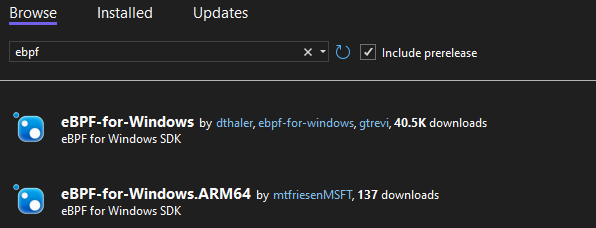
It's an announcement that might have seemed unthinkable not long ago, but the porting of the revolutionary eBPF technology to Windows is now a reality. The ability to bring safe programmability to the kernel has resulted in enormous gains in fields such as security, networking and observability for Linux hosts, so applying the same principle to the Windows ecosystem is obviously an attractive proposition. It is not, though, without its own difficulties. There were a lot of hurdles to overcome and, inevitably, given the differences in OS architecture, this is not a full-fidelity replica of the Linux implementation.
This possibly foundational article by Pavel Yosifovich guides you through the steps involved in boldly going where few have gone before and creating your first eBPF program for Windows. One paragraph in the article begins with the sentence “this is where things get a bit hairy“ - for some that will likely be a challenge rather than a deterrent. This may not be cooking up nuclear fusion in your bedroom, but it does feel pretty radical.
As well as rolling out their Open AI observability solution, Elastic have also been very active within the OpenTelemetry project. C++ has a reputation for being something of a fearsome foe for observability practitioners. In this article on the Elastic blog, Haidar Braimaanie dons his protective gear and attempts to tame the beast with a soothing dose of OpenTelemetry instrumentation.
Unlike languages built in frameworks such as .NET, C++ does not have a standardized runtime environment that supports dynamic instrumentation across all platforms and compilers. C++ also uses a variety of build systems such as Makefiles and CMake, so that implementing instrumentation can be difficult and error-prone. In the article, Haidar looks at adding OpenTelemetry support to a C++ application running on Ubuntu 22.04. He also includes sample code for instrumenting the project with database spans and then observing the application in APM.
After reading this article you may want to give the C++ developer in your life a hug.
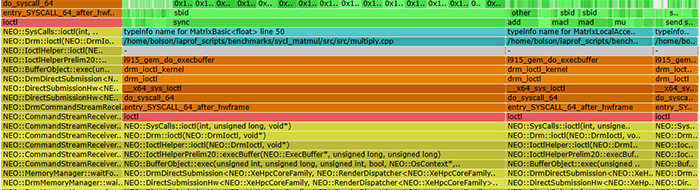
Even if you are not familiar with the name of Brendan Gregg, you are almost certainly familiar with the fruits of his labours. Brendan is the creator of the Flame Graph - one of the most important and iconic visualisations in the observability toolkit.
We featured the Flame Graph in our recent tribute to the work of UX designers in the observability arena - but you should also visit Brendans’ web site.
Brendan's latest innovation is the AI Flame Chart. This is an evolution of the original flame graph and its ambitious aim is to help reduce the vast financial and environmental costs entailed in the use of LLM’s. This means that whereas the original flame graph was focused on CPU cycles, the latest generation sets its sights on reducing GPU load. The article discusses the considerable complexities involved in mapping GPU programs back to their corresponding CPU stacks.
The names of some of the instruction sets look intimidating to the uninitiated but the basic concept of the graph is quite simple - the wider the bar, the more resource it consumes.
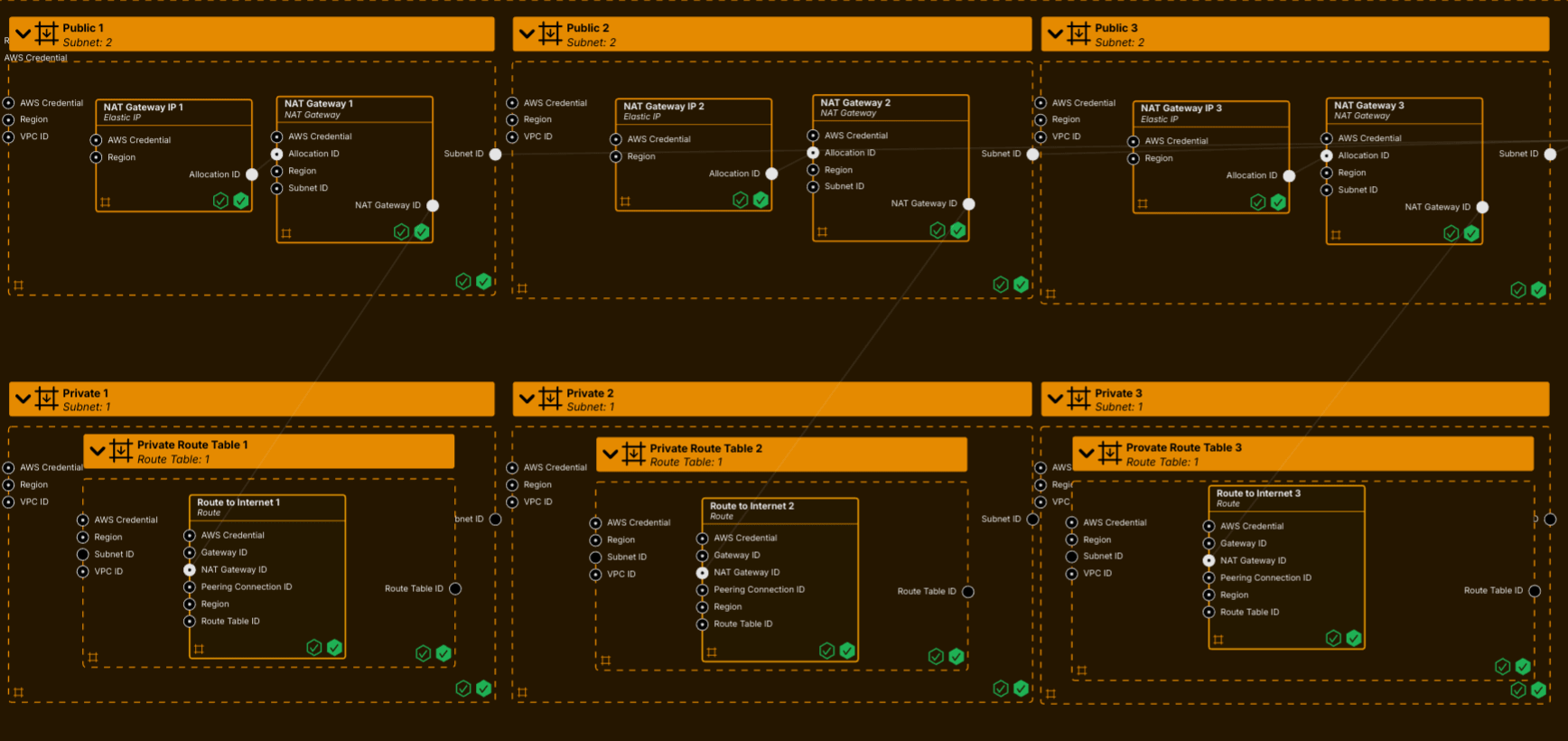
If you have ever had to grapple with a 3,000 line Helm chart to deploy your observability infrastructure, you may be forgiven for thinking that there must be a better way to do this. Whilst YAML has a certain formal elegance, its syntax struggles to express the architectures and relationships embedded in highly complex systems.
Whilst Pulumi have tackled this problem by enabling the use of high level programming languages for IaC, System Initiative are taking a fundamentally more radical approach. Their goal is nothing other than completely reinventing IaC from the ground up. The blog article for the launch of the product is an incredibly ambitious statement of intent. The terms ‘game changer’ and ‘paradigm shift’ tend to be thrown around somewhat casually, this might be a case where their usage is appropriate.
So, what are they proposing? Well, System Initiative is IaC without the code. It is a kind of digital canvas where you manipulate digital twins of your systems. Is the future here or is this the Platform Engineering equivalent of science fiction? Read the article and decide for yourself!